
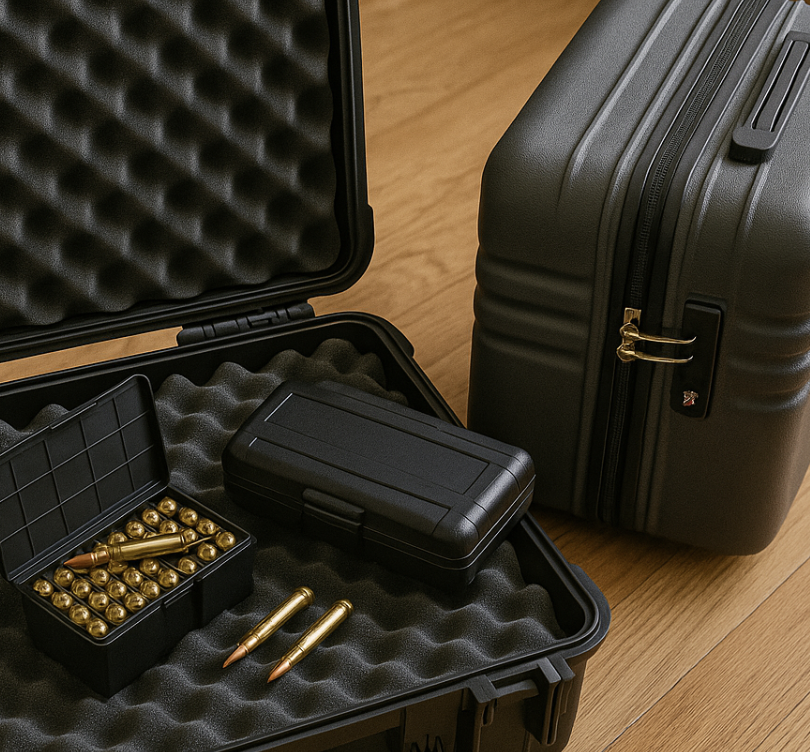
Traveling with ammunition is something many firearm owners eventually need to do, whether it’s for a hunting trip, a shooting competition, or a vacation where range time is on the schedule. While the process is straightforward when handled correctly, there are important laws, safety considerations, and best practices to keep in mind. Preparing ahead of time ensures your trip goes smoothly and keeps you compliant wherever you’re headed.
The first thing to understand is that ammunition is regulated differently depending on whether you’re traveling by car, plane, or crossing state lines. Each method requires its own set of precautions. The most flexible option is traveling by personal vehicle. In most states, transporting ammunition is perfectly legal as long as it is stored safely. Keeping ammo in its original packaging or in a sturdy container prevents damage and makes it easier to identify the caliber and type. Many owners use metal ammo cans or hard-sided boxes with secure latches, especially when carrying multiple boxes or larger quantities.
While the laws in most states are lenient about transporting ammunition in a private vehicle, it’s still wise to check local regulations before your trip. A few cities and states maintain specific transportation rules or quantity restrictions. Knowing these details in advance helps you avoid accidental violations. Storing ammo separately from firearms is considered best practice, even when not legally required. This is both a safety measure and a way to demonstrate responsible ownership if questioned.
Air travel introduces a different set of guidelines. The Transportation Security Administration (TSA) allows ammunition in checked baggage only, never in carry-on luggage. To comply with TSA requirements, ammunition must be packed securely in a fiberboard, plastic, or metal container specifically designed for ammo. Original factory boxes meet this requirement, and so do many aftermarket storage options. The goal is to prevent cartridges from shifting, rattling, or being exposed during transport.
Airlines may also have their own rules, so checking your carrier’s website before your trip is important. Some airlines require that ammunition be stored inside the same checked case as your unloaded firearm, while others require it to be in a separate locked container within your suitcase. Weight limits can apply too—usually around 5 kilograms (11 pounds). These guidelines help ensure safe handling during the loading and unloading of checked bags.
If you’re flying internationally, the process becomes more complex. Many countries require permits, advance declarations, or specific documentation for both firearms and ammunition. Some countries allow ammo to be carried in checked baggage with proper permits, while others do not allow travelers to bring ammunition across the border under any circumstance. For international travel involving firearms or ammunition, contacting the destination country’s embassy or consulate is essential.
Traveling by train or bus usually comes with stricter limitations. Most major passenger rail and bus lines do not allow ammunition onboard at all, even in checked luggage. If your travel plans involve one of these methods, you’ll need to arrange alternative transport for your ammunition or ship it separately through a carrier that allows properly labeled shipments.
Regardless of how you travel, labeling and organization go a long way. Keeping ammunition clearly marked, stored safely, and separated from other gear helps prevent mix-ups and makes it easier to comply with inspections. When driving, avoid leaving ammunition loose in the vehicle or exposed to direct sunlight. Excess heat can degrade powder and primers over time.
Responsible travel with ammunition is about preparation and awareness. By keeping ammo secured, understanding the laws of every state or country you pass through, and following TSA or airline rules when flying, you help ensure a safe and worry-free trip. A little planning goes a long way toward making your travel experience smooth, safe, and fully compliant.
Leave a Comment