When it comes to keeping ammunition safe for the long term, the container you use makes all the difference. Ammo is built to be durable, but it stays reliable only when it’s protected from what affects it most: moisture, temperature swings, dust, and physical damage. The right storage container keeps those factors under control and ensures your ammunition remains functional and ready whenever you need it. Selecting proper ammo cans and containers isn’t complicated, but understanding your options helps you make smart decisions that will last for years.
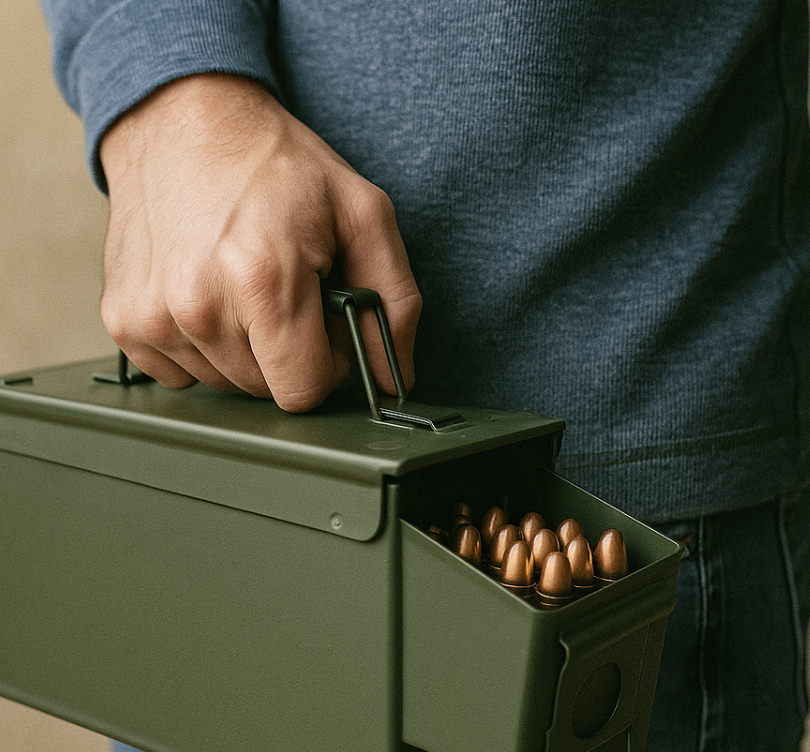
The traditional steel ammo can remains the most trusted and widely used storage option. Models like the classic M2A1 (commonly known as the .50-cal can) and the smaller M19A1 (.30-cal can) are known for their ruggedness. Made from thick steel, these cans can handle impact, stacking, and rough environments. Their biggest advantage is the rubber gasket around the lid, which creates an airtight seal when the latch is closed. This seal prevents moisture, dust, and debris from entering the container, making steel cans ideal for long-term storage. As long as the gasket remains intact and the can isn’t rusted through, a steel ammo can provide decades of reliable protection.
However, steel isn’t the only choice. High-quality plastic ammo cans have become increasingly popular due to their lighter weight and lower cost. Modern versions made from tough molded polymers can be surprisingly durable and provide nearly airtight seals with properly designed locking lids. Plastic cans don’t rust, don’t dent easily, and are often easier to carry. Their biggest drawback is heat sensitivity—extreme temperatures can warp thinner plastic or weaken hinges over time. Still, when kept in climate-controlled environments, heavy-duty plastic ammo cans serve as an excellent and practical alternative to steel.
For gun owners who want even more organization, compartmentalized storage boxes offer a structured way to separate different calibers or types of ammunition. These are particularly useful for reloaders and competitive shooters who need fast access to specific round counts or load types. These boxes typically hold 50 to 100 rounds and are made from durable polymer. They aren’t fully airtight, so they shouldn’t serve as the primary long-term storage solution, but they work very well inside a sealed ammo can. Think of them as internal organizers rather than standalone storage containers.
If your goal is absolute moisture control or long-term safekeeping, sealed dry boxes are another dependable option. These are designed for boating, camping, and outdoor use, meaning they’re built to protect gear from water and humidity. Many come with thick rubber seals and strong latches that rival ammo cans. While sometimes bulkier than steel cans, dry boxes offer additional storage space for desiccant packs, labels, and small accessories.
No matter which type of container you choose, inspecting the seal is essential. For steel cans, the rubber gasket should be pliable, free of cracks, and seated firmly. For plastic cans, the lid should lock tightly without gaps. A good test is simple: close the container and try gently pulling up on the lid. If it moves or shifts, the seal isn’t secure enough.
It’s also important to consider storage layout and functionality. Containers should be easy to stack, label, and access. Steel cans stack exceptionally well because of their rigid shape. Plastic cans with flat lids also offer good stackability, while rounded lids tend to slide. Labeling the exterior of each container—caliber, quantity, brand, and date—keeps your stash organized and reduces the need to open containers unnecessarily.
For added protection, desiccant packs should be placed inside any long-term ammo storage container. These inexpensive moisture absorbers serve as a final line of defense against humidity. The packs are especially useful in humid climates or homes without climate-controlled storage rooms.
In the end, the “best” ammo container is the one that suits your storage conditions, budget, and organization style. Steel cans offer unmatched durability; plastic cans provide convenience and low weight; dry boxes and compartment cases add versatility. Using containers with strong seals, consistent labeling, and proper internal organization ensures your ammunition stays safe, clean, and ready for use—no matter how long it sits on the shelf.
Leave a Comment