Safe handling and transport of ammunition is a fundamental part of responsible firearm ownership. Whether you’re heading to the range, storing your gear at home, or driving across town for a training session, understanding the right way to handle and move your ammunition protects not only your equipment but everyone around you. These practices are straightforward, but they matter every time you pick up a box of rounds.
The most important principle is consistency. Treat ammunition with the same level of respect and attention that you apply to handling a firearm. That starts with keeping it in its original packaging whenever possible. Manufacturers design these boxes to protect the cartridges, prevent damage, and reduce the risk of accidental discharge from impact or friction. When you transfer loose rounds into bags or containers, you lose that added layer of safety and organization.
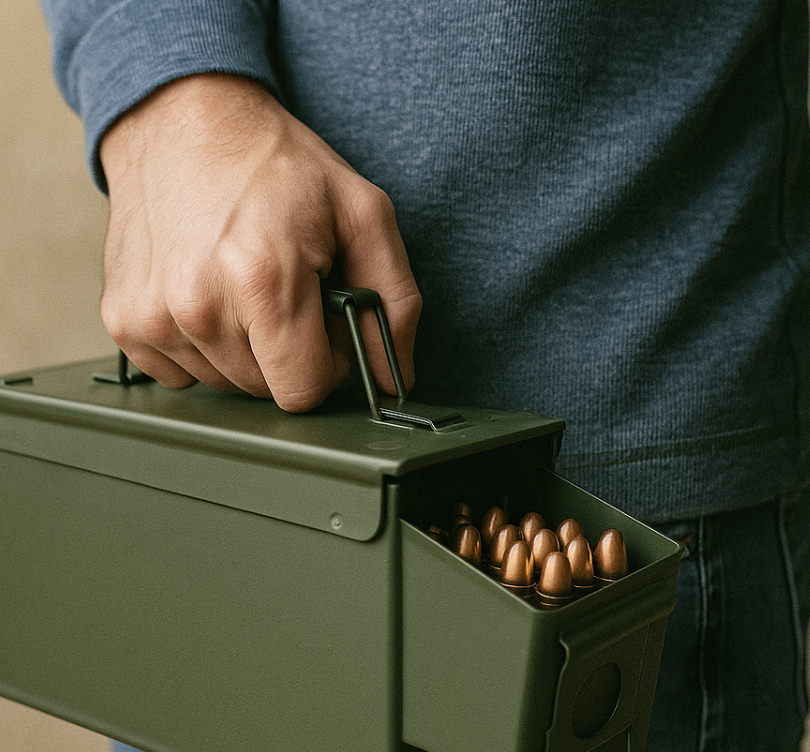
If you prefer to store your ammunition in bulk, choose sturdy, purpose-built containers. Metal ammo cans with a secure latch, rubber seal, and rigid body are a popular choice. They protect against moisture, impact, and shifting during transport. Plastic ammo boxes designed specifically for cartridges also work well. Whatever you choose, avoid flimsy or improvised containers that could break open or collapse under weight.
Temperature control is another key factor. Ammunition performs best when kept in moderate, stable climates. Leaving rounds in a hot vehicle for long periods, storing them near heaters, or exposing them to freezing conditions can degrade components like powder and primers. When transporting ammunition in your car, bring it inside as soon as you reach your destination rather than letting it sit in extreme conditions.
As for handling, clean and dry hands are always recommended. Oils, sweat, and moisture can corrode casings over time, especially if ammunition is being stored for future use. While handling rounds briefly won’t cause immediate issues, minimizing exposure helps preserve quality over the long term. If you notice any corrosion, dents, or unusual discoloration, set those rounds aside and do not use them.
When loading or unloading ammunition at the range, take your time. Rushing leads to dropped rounds, improper seating, or mixing different calibers. These mistakes can lead to malfunctions or damaged firearms. Organize your shooting area so your ammunition is easy to reach but cannot roll off a bench or get mixed with other gear. Clear separation and attention to detail make your range sessions safer and more efficient.
Transporting ammunition in a vehicle requires a few additional considerations. Most states allow ammunition to be transported without special permits, but always check local regulations to ensure compliance. A general rule is to keep your ammunition secured in a container and placed in the trunk or cargo area. This keeps it away from heat sources and prevents loose rounds from becoming projectiles in the event of sudden stops or accidents.
If you are traveling with both firearms and ammunition, storing them separately is the best practice. Even if not legally required, separation adds a layer of safety and helps prevent confusion during travel. Securing the firearm in a locked case and the ammunition in a separate locked container helps you stay organized and compliant with most guidelines.
Longer trips, such as flights, come with additional rules. Airlines typically require ammunition to be stored in original packaging or a sturdy container, and placed inside checked baggage only. Reviewing the airline’s policy ahead of time ensures a smoother experience at the ticket counter.
Safe handling and transport of ammunition may not be complicated, but it benefits from good habits. Sturdy containers, careful organization, awareness of temperature, and consistent adherence to local laws all contribute to responsible ownership. When you take the time to handle ammunition correctly, you protect your investment and create a safer environment for everyone who shares your range, vehicle, or home.
Leave a Comment