Bullet weight is one of those details that many new shooters overlook at first, but it has a meaningful impact on accuracy, recoil, and overall performance. Measured in grains, bullet weight influences how a round behaves from the moment it leaves the barrel until it reaches its target. Understanding how these weights work—and how they match your specific needs—helps you choose ammunition with confidence, whether you’re training, hunting, or selecting rounds for personal protection.
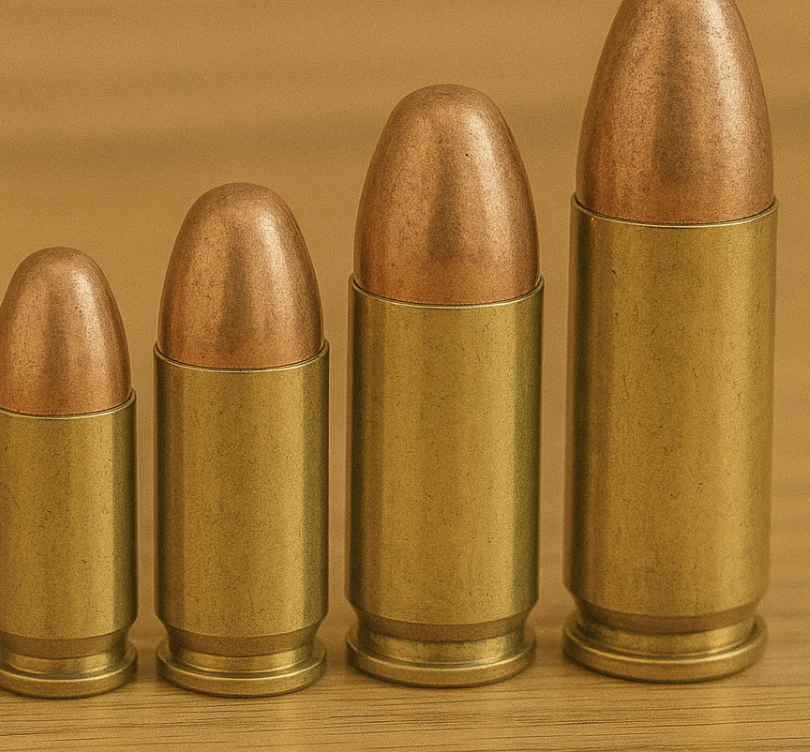
Bullet weight begins with the simple fact that not all firearms are designed the same way. Even within a single caliber, different grain weights can perform very differently depending on barrel length, rifling, and the way each firearm handles pressure. For example, in common handgun calibers like 9mm, you’ll see popular offerings at 115, 124, and 147 grains. Each of those will feel slightly different in recoil and may group differently downrange.
Lighter bullets are often associated with higher velocity. Because they are easier to propel, lighter rounds leave the barrel faster and tend to have a flatter trajectory at shorter distances. This can be helpful for training or competition shooting where faster follow-up shots and predictable flight paths are beneficial. Many range shooters prefer lighter-weight full metal jacket rounds because they are affordable, consistent, and widely available.
Heavier bullets, on the other hand, offer advantages of their own. Their added mass can help with stability, especially at longer distances. Heavier rounds also tend to create a different recoil impulse—often slower and smoother—which some shooters find easier to manage. In defensive ammunition, heavier hollow point rounds are common because the extra mass supports better penetration and controlled expansion, both of which contribute to the round’s effectiveness.
Rifling twist rate plays a major role as well. Each firearm barrel has a twist rate designed to stabilize a certain range of bullet weights. If the bullet is too light or too heavy for the twist rate, accuracy may suffer. While many modern firearms are engineered to handle a wide variety of weights, testing remains the best way to discover what your particular setup prefers.
Different shooting applications call for different weights. For example, small-game hunters using .22 LR might choose lighter rounds to maintain speed and reduce drop over distance. Hunters using centerfire rifles often select heavier bullets for increased penetration and energy transfer—key factors for ethical, effective harvesting. Long-range shooters tend to prefer heavy-for-caliber bullets because they resist wind drift and maintain better stability during flight.
Personal protection requires another layer of consideration. Defensive handgun ammunition is commonly offered in a mid-range weight that balances speed, expansion, and penetration. In 9mm, many shooters find that 124- or 147-grain hollow points offer reliable performance across a wide variety of firearms. Testing several weights helps confirm which load feeds reliably, cycles smoothly, and prints consistent groups in your gun.
It’s important to remember that there is no universal “best” bullet weight. What works well in one firearm might perform differently in another. This is why hands-on testing is so valuable. A few boxes of different weights can help you determine which load gives the best combination of accuracy, comfort, and reliability. Paying attention to how each round behaves on the range—group size, recoil feel, muzzle rise, and point of impact—provides clear clues about what your firearm prefers.
Environmental factors can also influence performance. Temperature, altitude, and humidity all interact with bullet velocity and stability. Shooters who train in multiple climates or who compete at varying distances often fine-tune their bullet selection to match conditions for optimal consistency.
Choosing the right bullet weight is ultimately about understanding your goals and learning how your firearm responds. With a little testing and awareness, you can select ammunition that enhances your shooting experience, improves accuracy, and supports safer, more effective results every time you head to the range.
Leave a Comment